Titanium

Basic Properties

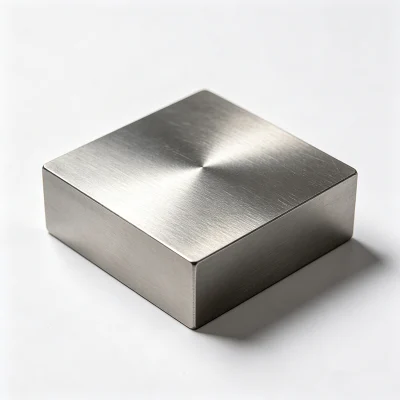
Titanium (chemical symbol Ti, atomic number 22) is a lightweight, high-strength transition metal with silver-gray metallic luster.

  • Low density: about 60% the weight of steel, lighter than stainless steel and aluminum alloys while far stronger.
  • Outstanding specific strength: high strength-to-weight ratio, lighter yet tougher than many structural metals.
  • Extreme corrosion resistance: naturally forms a thin, dense inert titanium oxide film on its surface when exposed to air or liquid, resisting acids, salt water, seawater and humid environments without rusting.
  • Biocompatible: non-toxic, non-reactive with human body tissues, no rejection risk.
  • Heat resistance: maintains stable mechanical performance under high temperatures; high melting point.
  • Drawbacks: High raw material cost; difficult cutting & machining; special surface treatments required.

Common Surface Finishes for Titanium

  1. Electropolishing: Mirror smooth, stress-free, ultra-clean surface for medical and vacuum parts.
  2. Anodizing: Produces stable colorful interference layers without dye, improves wear & corrosion resistance.
  3. Sandblasting: Matte uniform texture for decorative and anti-glare use.

Main Applications

  • Medical industry: Implants, bone screws, surgical instruments, dental brackets (safe for human body)
  • Aerospace: Aircraft frames, engine parts, rocket components (lightweight + high strength)
  • Marine & offshore: Seawater pipelines, underwater equipment (excellent salt corrosion resistance)
  • Precision machinery: Sports equipment, watch cases, camera frames, CNC hardware
  • Chemical equipment: Reaction vessels, acid-resistant pipes

Material parameters

ParameterValue
Price$$$$$
Delivery time10 days
Wall thickness0.75 mm
Tolerance±0.005 inch(±0.125 mm)
Maximum part size200 x 80 x 100 cm
Available Titanium Grades:Titanium Alloy TA1, Alloy TA2, Alloy TC4/Ti-6Al 4V

Frequently Asked Questions

To shorten the lead time for CNC workpieces, we start with the documentation you provide. Please submit complete, clear 2D drawings and 3D models, including dimensional tolerances, surface finish requirements and machining specifications. Please also specify any special materials, surface treatments and assembly requirements. Avoid incomplete drawings, ambiguous annotations and inconsistent document versions.


Complete documentation allows us to proceed directly with programming, production planning and scheduling, reducing the need for repeated clarification and additional information. We also recommend finalising order quantities, delivery schedules and special requirements in advance. Addressing these details early helps minimise unnecessary communication and the risk of rework, shortening the overall lead time.

With 12 years of experience in CNC machining, Kong Fai stands out from other manufacturers and intermediaries. Our factory covers 4,000 [unit to confirm] and is equipped with over 100 production machines. We achieve machining accuracy of up to 0.001 mm, enabling us to produce high-precision components.


Supported by standardised production management, we maintain an on-time delivery rate of 98%. As a direct manufacturer with fully in-house production capabilities, we control every stage of production without outsourcing. We deliver consistent quality, exceptional precision and reliable lead times, making us a trusted partner for precision CNC machining.

Fast delivery is one of our key strengths. For 3D printing orders, we offer delivery within three days, ideal for rapid prototyping and urgent sample requests. For standard CNC machining projects, the typical lead time is around three weeks.


We manage the entire process in-house, from drawing review and process planning to production, quality inspection and dispatch, without intermediaries. With comprehensive facilities and an experienced team, we reliably fulfil both urgent sample orders and mass-production requirements. We maintain consistent quality and dependable lead times to keep your projects on track.

We offer a wide range of surface treatments and colour options, including anodising, powder coating, spray painting, electroplating, brushing, sandblasting and polishing.


Anodising offers various colours and strong corrosion resistance for aluminium parts. Powder coating and spray painting provide durable coatings in an extensive range of colours, while electroplating enhances lustre and corrosion resistance. Brushing creates fine linear textures, sandblasting produces a matt finish, and polishing achieves a smooth, bright surface.


Colours and finishes can be customised to suit your application requirements.

Yes, we provide material certificates and relevant test reports for our CNC-machined parts. All raw materials are sourced from qualified suppliers and supported by appropriate documentation.


Material certificates, dimensional inspection reports and quality test records are available on request. Every product undergoes rigorous inspection before dispatch. These documents help demonstrate material compliance and product quality, supporting your quality audits and project requirements.

We apply strict quality control measures to prevent non-conforming products. Every workpiece undergoes dimensional and visual inspection during and after production to check compliance with the design drawings and specifications.


If any items do not meet the agreed specifications, we will take immediate responsibility. We will promptly review the issues with you and arrange rework or remanufacture as required, at no additional cost. We will cover all related costs.


We will also analyse the root cause and improve our processes to prevent similar issues from recurring. Our goal is to consistently deliver conforming products and keep your project on track.

滚动至顶部