Kovar (FeNiCo)

Basic Properties

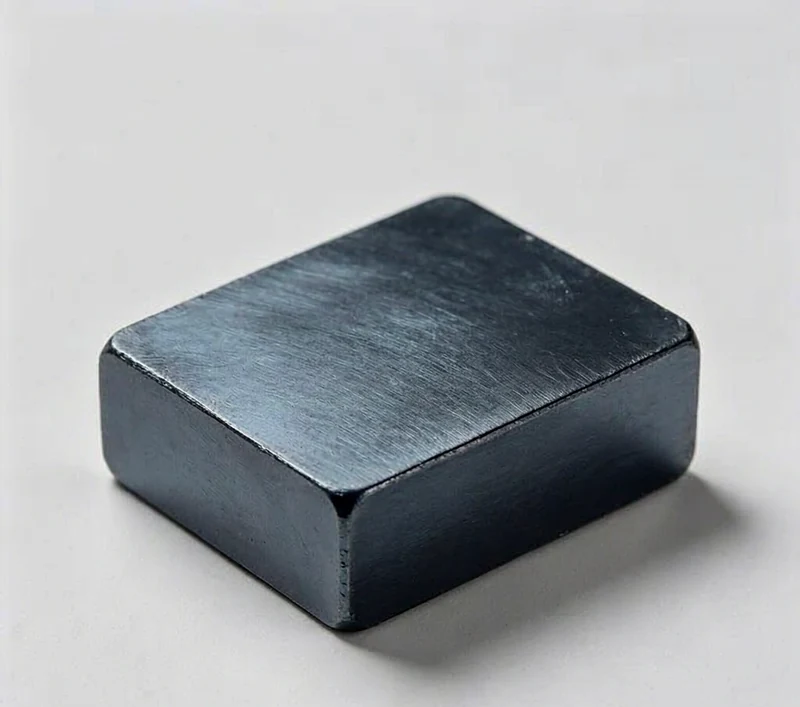
Kovar (Fe-Ni-Co alloy, Chinese grade 4J29, UNS K94610, ASTM F15) is a controlled-expansion alloy designed for hermetic glass-to-metal and ceramic-to-metal sealing.

  • Matched thermal expansion: the coefficient of expansion follows borosilicate glass and alumina ceramics from room temperature to about 450 °C, so seals stay vacuum-tight through thermal cycling.
  • Hermetic sealing: a thin, tenacious oxide film forms during pre-oxidation in wet hydrogen, allowing glass to wet and bond to the metal.
  • Curie temperature around 435 °C: magnetic below it, non-magnetic above it.
  • Good machinability and weldability: turned, milled, drilled, stamped and deep drawn, then brazed or resistance welded.
  • Moderate corrosion resistance: needs nickel or gold plating for humid, marine or long-life electronic service.
  • Drawbacks: nickel and cobalt content makes it costly; excessive cold work or wrong annealing cycles spoil the expansion match.

Common Surface Finishes for Kovar

  1. Nickel plating: solderable, corrosion-resistant base layer, standard before glass sealing or brazing.
  2. Gold over nickel: low contact resistance and stable RF performance for microwave packages.
  3. Electroless nickel: uniform coverage on deep housings, connectors and feedthrough bodies.
  4. Bright hydrogen anneal: oxide-free, stress-relieved surface for critical sealing faces.
  5. Passivation and pickling: removes machining contamination before plating.

Main Applications

  • Hermetic electronic packages: TO headers, IC lids, microwave and RF housings.
  • Vacuum feedthroughs, connectors and glass-to-metal seals for sensors and detectors.
  • Laser diodes, photodiodes, MEMS and crystal oscillator packages.
  • Aerospace and cryogenic electronics, X-ray tube and high-vacuum instrument parts.
  • Precision instruments where dimensional stability across temperature matters.

Material parameters

ParameterValue
Price$$$$$
Delivery time12 days
Wall thickness0.5 mm
Tolerance±0.005 inch (±0.125 mm)
Maximum part size200 x 80 x 100 cm
Available Kovar Grades4J29 / UNS K94610 / ASTM F15, rod, plate and strip

Frequently Asked Questions

To shorten the lead time for CNC workpieces, we start with the documentation you provide. Please submit complete, clear 2D drawings and 3D models, including dimensional tolerances, surface finish requirements and machining specifications. Please also specify any special materials, surface treatments and assembly requirements. Avoid incomplete drawings, ambiguous annotations and inconsistent document versions.


Complete documentation allows us to proceed directly with programming, production planning and scheduling, reducing the need for repeated clarification and additional information. We also recommend finalising order quantities, delivery schedules and special requirements in advance. Addressing these details early helps minimise unnecessary communication and the risk of rework, shortening the overall lead time.

With 12 years of experience in CNC machining, Kong Fai stands out from other manufacturers and intermediaries. Our factory covers 4,000 [unit to confirm] and is equipped with over 100 production machines. We achieve machining accuracy of up to 0.001 mm, enabling us to produce high-precision components.


Supported by standardised production management, we maintain an on-time delivery rate of 98%. As a direct manufacturer with fully in-house production capabilities, we control every stage of production without outsourcing. We deliver consistent quality, exceptional precision and reliable lead times, making us a trusted partner for precision CNC machining.

Fast delivery is one of our key strengths. For 3D printing orders, we offer delivery within three days, ideal for rapid prototyping and urgent sample requests. For standard CNC machining projects, the typical lead time is around three weeks.


We manage the entire process in-house, from drawing review and process planning to production, quality inspection and dispatch, without intermediaries. With comprehensive facilities and an experienced team, we reliably fulfil both urgent sample orders and mass-production requirements. We maintain consistent quality and dependable lead times to keep your projects on track.

We offer a wide range of surface treatments and colour options, including anodising, powder coating, spray painting, electroplating, brushing, sandblasting and polishing.


Anodising offers various colours and strong corrosion resistance for aluminium parts. Powder coating and spray painting provide durable coatings in an extensive range of colours, while electroplating enhances lustre and corrosion resistance. Brushing creates fine linear textures, sandblasting produces a matt finish, and polishing achieves a smooth, bright surface.


Colours and finishes can be customised to suit your application requirements.

Yes, we provide material certificates and relevant test reports for our CNC-machined parts. All raw materials are sourced from qualified suppliers and supported by appropriate documentation.


Material certificates, dimensional inspection reports and quality test records are available on request. Every product undergoes rigorous inspection before dispatch. These documents help demonstrate material compliance and product quality, supporting your quality audits and project requirements.

We apply strict quality control measures to prevent non-conforming products. Every workpiece undergoes dimensional and visual inspection during and after production to check compliance with the design drawings and specifications.


If any items do not meet the agreed specifications, we will take immediate responsibility. We will promptly review the issues with you and arrange rework or remanufacture as required, at no additional cost. We will cover all related costs.


We will also analyse the root cause and improve our processes to prevent similar issues from recurring. Our goal is to consistently deliver conforming products and keep your project on track.

滚动至顶部